

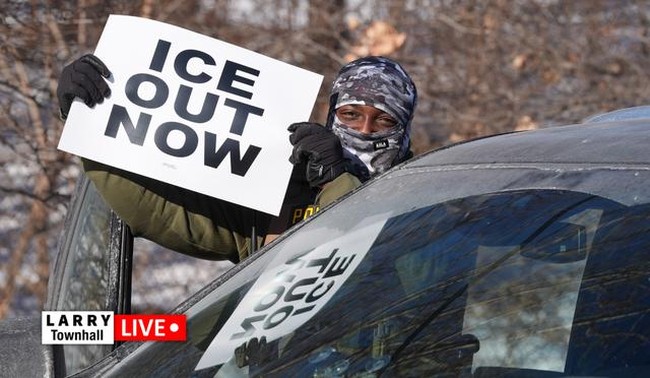
The ICE shooting in Maine isn’t just another border story—it’s a textbook case of what happens when sanctuary policies and open-border rhetoric collide with the real world. An illegal alien allegedly tried to use his vehicle as a weapon against federal officers, and the predictable result was a use-of-force incident that Democrats immediately tried to spin as excessive or unjustified. Their talking points collapsed under the weight of bodycam and dashcam evidence, exposing once again the reflexive habit of blaming law enforcement rather than the criminal who chose to ram an officer. For the 2A community this matters because the same politicians who want to disarm law-abiding citizens are the ones who refuse to secure the border or support officers who must make split-second decisions when a car becomes a deadly weapon.
The deeper implication is that immigration enforcement and the right to keep and bear arms are two sides of the same coin: both rest on the principle that government exists to protect citizens, not to shield lawbreakers. When Democrats oppose every enforcement tool—from interior removals to E-Verify to physical barriers—they create the very conditions that force officers into high-risk encounters. Those encounters, in turn, become the pretext for renewed attacks on armed self-defense and qualified immunity. The 2A community should recognize the pattern: every time sanctuary jurisdictions release criminal aliens who then reoffend, the political class pivots to gun control instead of fixing the policy failure that put the gun or the car in dangerous hands.
Meanwhile, the same ideological coalition that cheers open borders also pushes cultural agendas that clash with traditional societies, as seen in the gay cruise denied entry by Turkey and Egypt. The contrast is instructive. Nations that still enforce borders and cultural standards face no identity crisis over whether to protect their citizens; American progressives, by contrast, treat both immigration law and the Second Amendment as optional. The 2A community’s takeaway is straightforward: rights are only as secure as the willingness to enforce laws at the border and to defend the armed citizen and officer alike when those laws are challenged.


