

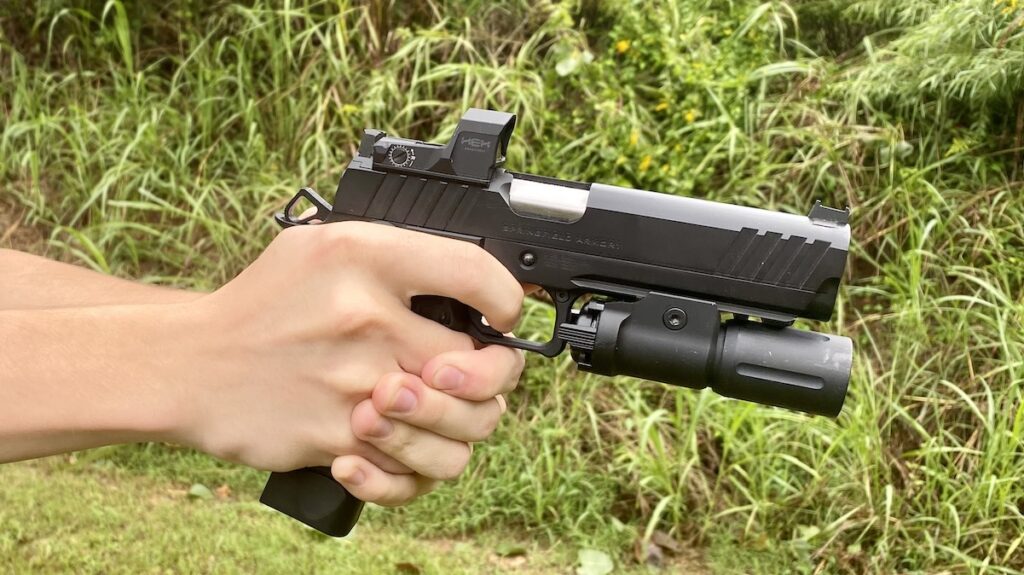
Springfield Armory’s 5-inch double-stack Prodigy takes the classic 1911 formula—single-action trigger, crisp reset, and that unmistakable grip angle—and scales it up with a 17-plus-one 9mm magazine without turning the gun into a boat anchor. At roughly the same street price as many striker-fired “duty” pistols, the Prodigy undercuts the artificial scarcity pricing that has long defined the 2011 market, forcing enthusiasts to ask whether they’re paying for performance or for the privilege of owning a limited-run nameplate. The result is a pistol that feels like a custom shop gun at production prices, and that shift matters: when a major manufacturer democratizes double-stack 1911 ergonomics, the entire aftermarket ecosystem—holsters, optics plates, magazines—expands, lowering barriers for new shooters who might otherwise default to polymer frames.
For the 2A community this isn’t just another product drop; it’s a quiet referendum on value versus exclusivity. Every time a Prodigy leaves a dealer’s case, it undercuts the narrative that only boutique builders can deliver race-ready 1911 handling, and that undercuts the regulatory argument that “common use” is limited to a handful of legacy designs. More importantly, it keeps money and innovation inside the domestic firearms economy rather than chasing imports or gray-market markups. When everyday carriers and competitors alike can afford a platform that shoots like a $3,000 custom gun, the practical effect is a larger, better-trained constituency ready to defend both the hardware and the rights that protect it.


