

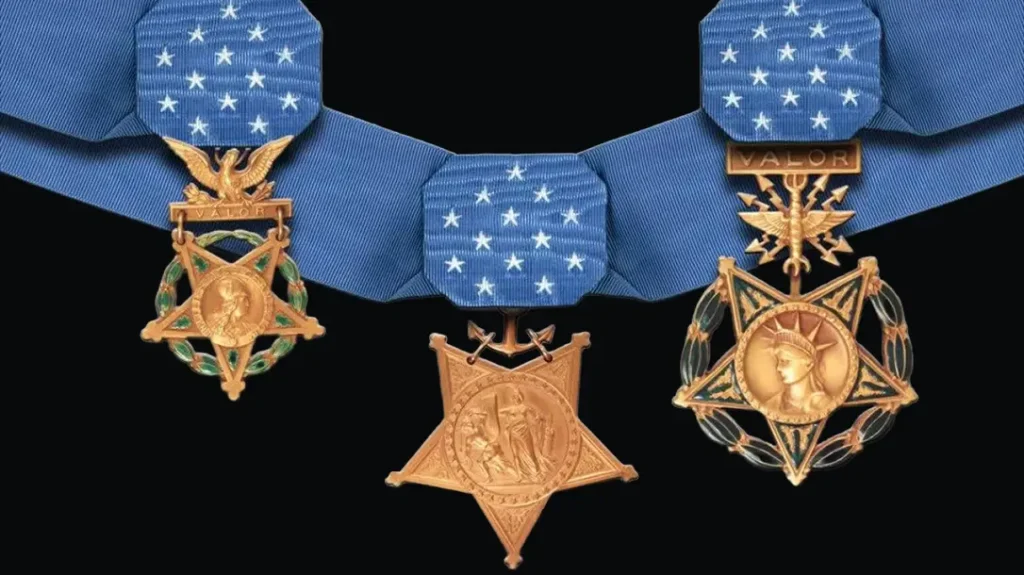
Three American warriors received the nation’s highest military decoration for actions that embodied the very spirit of the Second Amendment—citizens who, when the moment demanded it, became the last line of defense. Their stories are not abstract tales of distant battlefields; they are living proof that the right to keep and bear arms is inseparable from the duty to protect life when government forces cannot arrive in time. Each recipient turned training, discipline, and the willingness to confront evil into decisive action, reminding us that the Founders envisioned an armed citizenry precisely because free people must sometimes stand alone against tyranny or terror.
What makes these awards especially resonant for the 2A community is the unmistakable pattern: the same qualities that earn the Medal of Honor—cool judgment under fire, marksmanship, and moral courage—are the identical traits that lawful gun owners cultivate every day at the range and in their homes. When politicians push restrictions that treat every armed citizen as a potential threat, these ceremonies quietly refute the narrative. They demonstrate that an armed populace is not a danger to be managed but a reservoir of strength that has repeatedly saved lives on battlefields abroad and, by extension, can do the same on American soil when seconds count.
The broader implication is clear: honoring these men is not merely ceremonial; it is a reaffirmation that the right to arms is a civic virtue, not a grudging concession. As long as the Medal of Honor continues to recognize citizens who answer violence with superior skill and resolve, the case for an armed citizenry remains self-evident. The three recipients did not wait for permission or perfect conditions; they acted. That is the enduring lesson the 2A community draws from their example—preparedness is patriotism, and the Second Amendment remains the constitutional guarantee that ordinary Americans can still rise to extraordinary occasions.


