

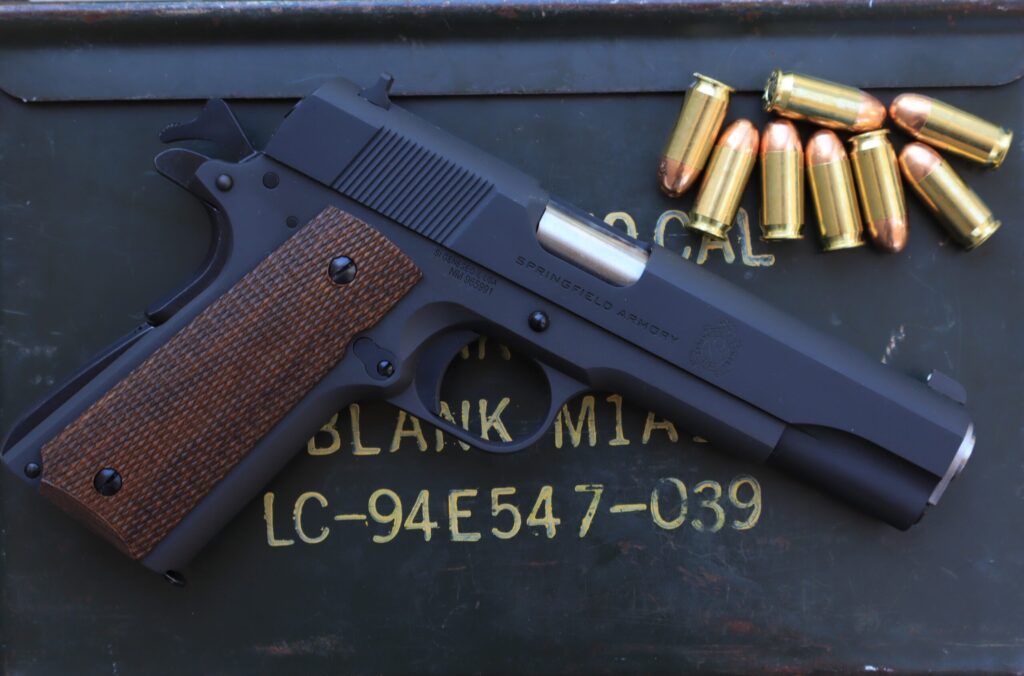
The Springfield Armory 1911 Mil-Spec isn’t just another slab-sided .45—it’s a deliberate nod to the pistol that helped define American military service for nearly eight decades. Where modern polymer frames chase ounces and rail space, this forged-steel classic sticks to the original blueprint: a 5-inch barrel, fixed sights, and a single-action trigger that still feels like a crisp glass rod breaking at around 4.5 pounds. That fidelity to the past isn’t nostalgia for nostalgia’s sake; it’s a reminder that the 1911 platform has survived every “obsolete” prediction because its ergonomics and manual of arms remain unmatched when seconds count.
For the 2A community, the Mil-Spec’s continued production signals something deeper than market demand—it’s a quiet affirmation that the right to keep and bear arms includes the right to keep and bear the tools our grandparents carried. Every time a new shooter picks up this gun and feels the slide’s authoritative snap or the grip safety’s reassuring click, they’re participating in a living tradition that predates most modern restrictions. In an era when some states treat magazine capacity like a moral failing, the 1911’s seven- or eight-round magazine forces a conversation about training, marksmanship, and the fact that rights were never meant to be measured in rounds-per-minute.
Ultimately, Springfield’s decision to keep the Mil-Spec in the catalog isn’t just good business—it’s cultural preservation. It tells legislators and anti-gun activists alike that the firearms community isn’t interested in trading heritage for compliance. As long as companies continue to build these pistols to the same specs that won world wars, the 2A isn’t an abstract talking point; it’s a tangible, steel-framed inheritance that each generation can defend, refine, and pass forward.


