

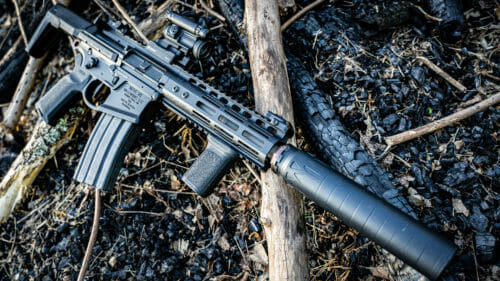
The seven-day stay is about to lapse, and 47 House Republicans are telling the Department of Justice to stop pretending the National Firearms Act’s $200 tax stamp is still a legitimate gatekeeper for items Judge Hendrix just declared outside its reach. Their letter is blunt: quit defending a registration scheme that collects zero revenue, and instead tell the ATF to treat the ruling as nationwide precedent rather than a one-district curiosity. That single move would instantly convert the case from a Texas-only win into a de-facto repeal of the NFA’s registration requirement for the affected items, something the Bureau has never been ordered to do before.
What makes this moment different from past ATF losses is the political math. The lawmakers aren’t asking for new legislation; they’re demanding the executive branch stop litigating against its own citizens while the case winds through appeal. If DOJ blinks, the practical effect is an administrative stand-down: no new Form 1s or Form 4s for the covered items, no more fingerprints or CLEO notifications, and no more $200 checks to a government that hasn’t collected the tax in any meaningful way since the Hughes Amendment. That’s not just regulatory relief; it’s a live demonstration that the NFA’s century-old architecture can be dismantled by litigation and political pressure rather than by Congress.
For the broader Second-Amendment community the stakes are twofold. First, a nationwide application would create an immediate, tangible reduction in federal gun control without waiting for the Supreme Court to weigh in on Bruen’s full scope. Second, it would hand the next administration a ready-made blueprint: if one district court can force the ATF to stop enforcing part of the NFA, future courts could be asked to do the same for suppressors, short-barreled rifles, or even the Hughes ban itself. The 47 signatories have essentially told DOJ that the political cost of continued defense now outweighs whatever institutional loyalty the agency still commands. Whether DOJ takes the hint will tell us how much of the NFA survives the next election cycle.


