

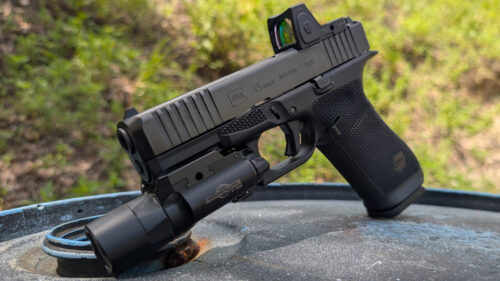
California’s latest attempt to criminalize Glock pistols by linking them to illegal conversion devices is running headlong into the same federal judge who already gutted the state’s Handgun Roster, and the timing couldn’t be more telling. The plaintiffs are pointing out the obvious: if the state can ban a lawfully manufactured firearm simply because someone might later attach a device that is already illegal, then every semi-automatic pistol in America is one legislative sentence away from prohibition. That logic collapses the entire “common use” test the Supreme Court laid out in Heller and Bruen, because virtually every modern handgun can accept aftermarket parts that bad actors might misuse. By returning to the same courtroom that previously recognized the Roster as an unconstitutional barrier to the right to keep and bear arms, the gun-rights coalition is forcing California to defend a policy that treats millions of law-abiding owners as presumptive criminals.
What makes this case especially dangerous for the anti-gun playbook is how nakedly it reveals the endgame: if Glock-pattern pistols can be banned for their modularity, then so can every other striker-fired, optics-ready, threaded-barrel handgun that dominates the market today. The state’s argument essentially asks the court to green-light a future in which any popular defensive firearm can be outlawed by pointing to hypothetical accessories rather than actual criminal conduct. That flips the constitutional presumption on its head—rights become privileges that exist only until a legislature dreams up a scary-sounding attachment. For the broader 2A community, the stakes are straightforward: either the courts will continue to require actual evidence of danger rather than speculative misuse, or California’s model will metastasize to every state willing to criminalize the mere existence of popular platforms.
If the judge stays true to his earlier ruling and blocks the ban, it will send a clear message that governments cannot evade Bruen scrutiny by manufacturing new categories of “assault features” out of thin air. Conversely, if the court allows the prohibition to stand, it hands every anti-gun legislature a roadmap for banning the single most common class of defensive handguns in the country simply by citing illegal devices that are already on the books. Either outcome will shape litigation from coast to coast, because the underlying principle—whether a firearm’s lawful design can be criminalized based on someone else’s future lawbreaking—will determine how much of the modern firearms market survives the next wave of restrictions.


