
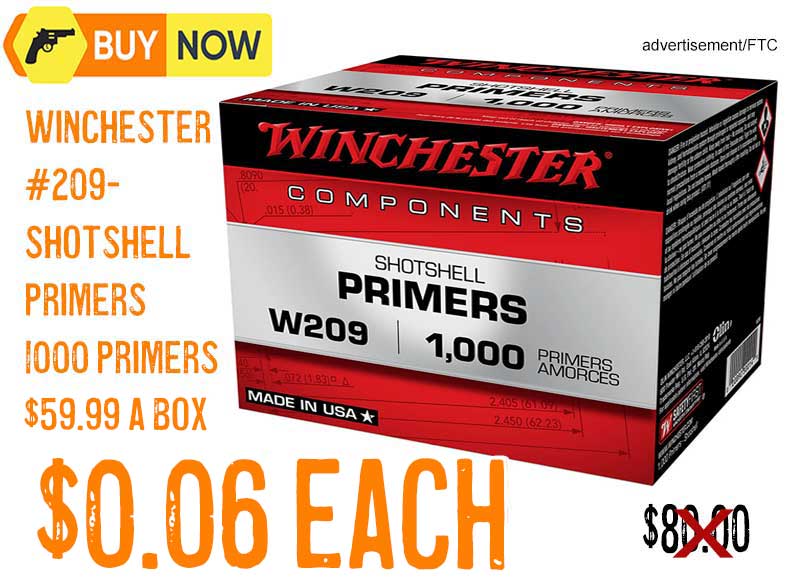
Winchester’s decision to slash 25% off their #209 shotshell primers—bringing the per-unit cost down to just six cents—lands like a strategic counterpunch in an industry still feeling the aftershocks of pandemic-era shortages and regulatory pressure. For reloaders who have watched primer prices swing from pennies to dimes and back again, this isn’t merely a sale; it’s a signal that domestic capacity is finally catching up with demand while simultaneously undercutting the narrative that component scarcity is permanent. At scale, a thousand primers for sixty bucks means a box of 12-gauge reloads can be assembled for well under the cost of a single factory round in many calibers, flipping the economics of high-volume shooting back in favor of the individual.
That pricing also carries quiet political weight. Every primer that leaves Winchester’s Illinois plant represents one more round that doesn’t have to be imported or rationed under future allocation schemes, reinforcing the decentralized resilience the Second Amendment community has long argued is essential to meaningful self-reliance. Bulk availability at this level rewards the disciplined reloader who invests time and equipment rather than the casual buyer dependent on whatever happens to sit on a retailer’s shelf, widening the capability gap between the prepared and the unprepared. In an environment where state-level restrictions on ammunition components continue to surface, Winchester’s move quietly expands the margin of maneuver for those who choose to stock components instead of finished cartridges.
For the broader 2A ecosystem, the real story isn’t the six-cent sticker; it’s the precedent that sustained domestic production can still respond to market signals faster than regulators can constrain them. Reloaders who lock in now aren’t simply saving money—they’re participating in a distributed manufacturing network that keeps the right to keep and bear arms functionally exercisable even if finished ammunition channels tighten. In that sense, Winchester’s discount functions as both an economic opportunity and a small but tangible affirmation that the tools of liberty remain manufacturable at the individual level.


